

Brandy Tasting
Basic Ways to Enjoy
There are two main styles of drinking brandy: traditional and modern.
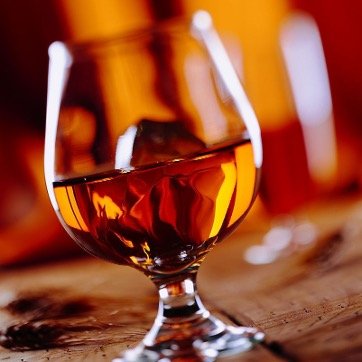
The best way to appreciate the true quality of fine brandy is through the traditional method—neat, without any additions.
Only by tasting it in its purest form can one truly experience the essence and soul of this liquid artwork.
While many young people today prefer to drink brandy with ice, water, or mixers,
this approach is more suitable for standard-grade brandy.
For well-aged, premium brandy, adding water or ice dilutes decades of maturation,
sacrificing its rich, concentrated flavor.
That’s why neat drinking is highly recommended for vintage brandy.
For those—especially women—who may find brandy’s spiciness a bit intense,
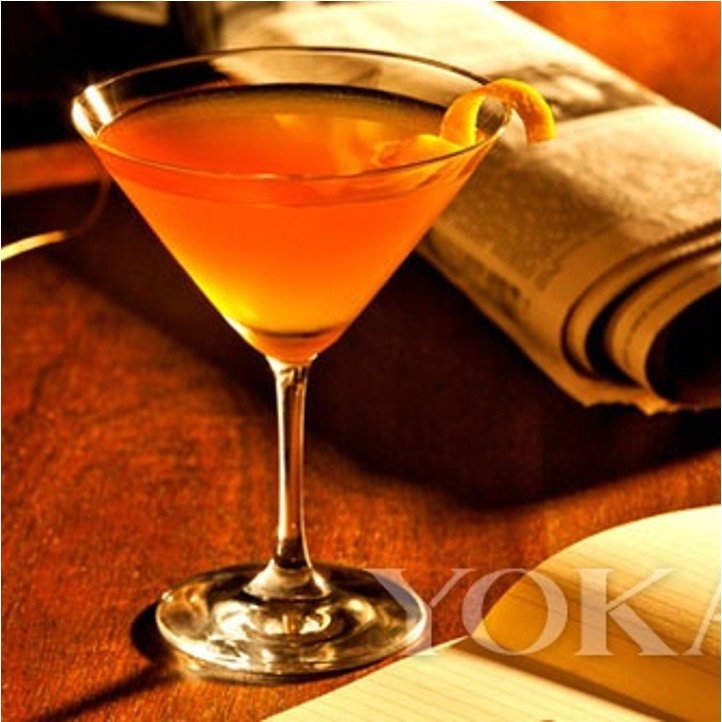
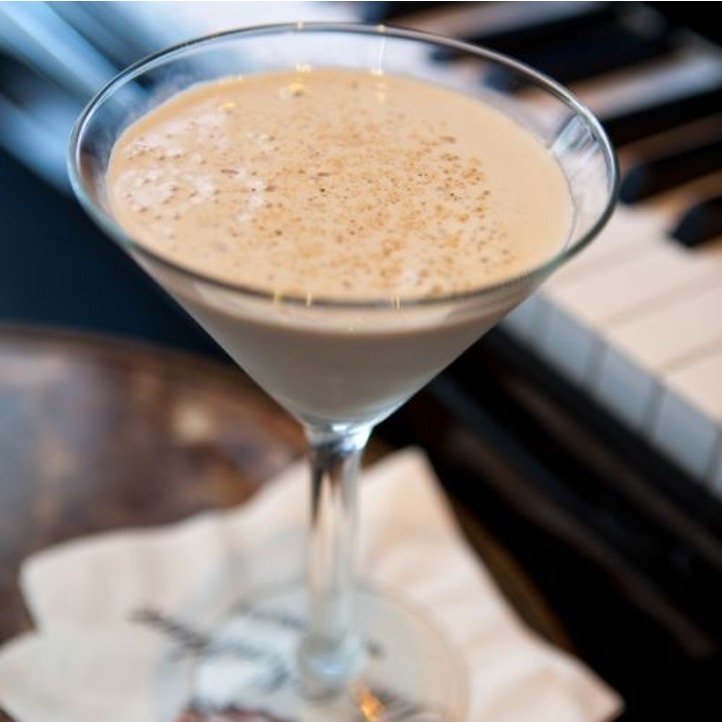
it can be transformed into refined cocktails.
Some of the most famous brandy-based cocktails include:
- Sidecar
- Alexander
- Brandy Sour
- Metropolitan
Brandy Tasting: Look, Smell, Taste
Visual Evaluation of Brandy
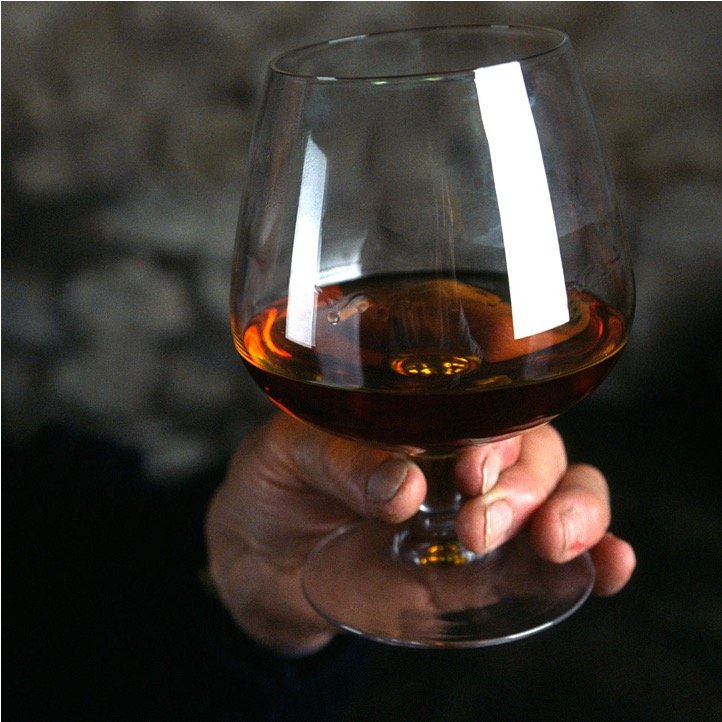
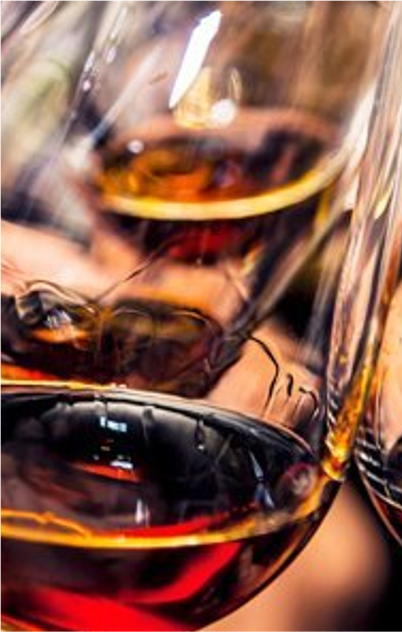
Begin by pouring a small amount of brandy—just a few milliliters—into a tasting glass. Place your finger on one side of the glass and observe from the opposite side. If you can clearly see your fingerprint through the liquid, and the brandy appears amber-colored, you’re likely holding a high-quality brandy.
Next, gently swirl the glass horizontally along its central axis. Observe the trails the brandy leaves on the inner wall of the glass—this is known as the “legs” or “tears”.
- If the legs remain visible for about 5 seconds, the brandy has likely been aged for 5–8 years.
- If they persist for up to 15 seconds, the aging period is approximately 20 years.
- For brandy aged 50 years, the legs can remain distinct for 17–18 seconds.
Now, compare the size and consistency of the descending legs: If they are uniform in thickness, it suggests the brandy contains minimal additives, indicating purity and craftsmanship.
The Three Layers of Aroma in Brandy
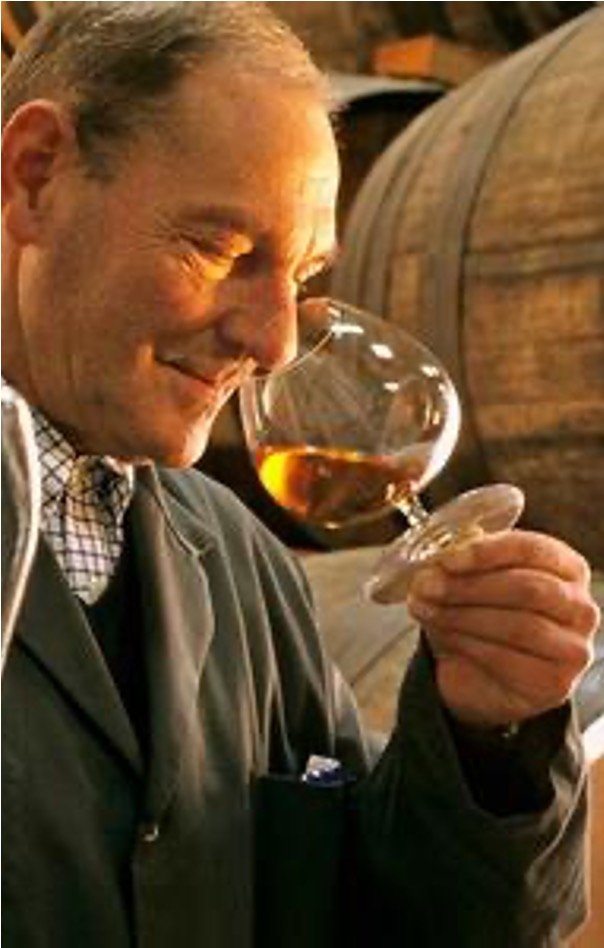
Brandy reveals its complexity through three aromatic layers, often referred to as “waves,” each offering a distinct sensory experience:
First Wave – 5 cm above the glass wall
At this distance, you can effortlessly detect the initial aromas rising from the brandy—typically soft notes like vanilla, hinting at its aging and barrel influence.
Second Wave – Direct contact with the glass wall
Bring your nose closer to the rim, and you’ll encounter floral and fruity scents.
Fine brandies may reveal delicate nuances such as:
- Rose petals
- Linden blossoms
- Apricot
- Dried fruits
- Candied fruit
- Walnuts
To fully appreciate these layers, gently swirl the glass in your hand. This enhances evaporation, allowing the aromas to unfold more vividly.
Third Wave – Nose directly above the glass
Here, you’ll sense the matured character of the brandy—the unmistakable oak barrel notes and the complex aged bouquet that define its depth. Despite the richness, each aroma remains subtle and distinct, never overpowering one another.
Tasting Brandy: A Slow Awakening of the Senses
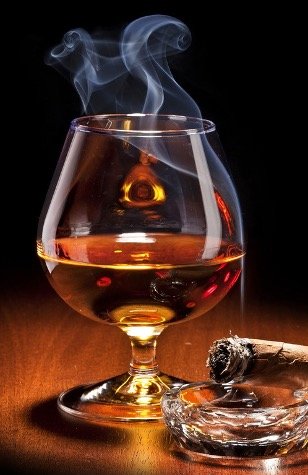
After years of aging in quiet slumber, brandy requires ample time to breathe before tasting. It should be sipped slowly and thoughtfully—never consumed in a single gulp, as its high alcohol content demands respect and patience.
For first-time tasters, begin with just a few drops. Its aroma is intensely concentrated, and too much at once may overwhelm the palate. After the initial sips, you may feel a burning sensation and sharp heat in the mouth—this is the result of esters and alcohol vapors saturating your upper palate.
But with the second sip, your senses begin to adapt. Your taste buds recalibrate, allowing you to validate your earlier impressions from aroma, and to explore the multi-layered richness and purity of the brandy’s flavor.
The finish, or aftertaste, is the lingering sensation that remains after swallowing. Its duration reflects the depth of the brandy’s character. The finest brandies leave a finish that lasts several minutes, and even longer in memory—a lasting, exquisite echo of the experience.